Releasing Toys
Releasing means a child opens their fingers and thumb to let go of an object. During this phase, you might notice your baby constantly dropping toys, spoons, or food from their high chair. While picking up the same item for the twentieth time can be exhausting, this is actually an exciting fine motor milestone! Your baby is learning how to let go of objects purposefully. This requires complex brain-muscle coordination and lays the groundwork for future skills.
Why Does Releasing Matter?
Learning to release objects is important because it supports many everyday skills and play activities. A child uses releasing skills to:
- Hand toys or objects to another person
- Drop toys into containers during play
- Self-feed by placing finger foods into the mouth
- Put toys away or clean up
- Stack blocks or place puzzle pieces
- Use both hands together during play
Releasing also helps develop hand control, coordination, and eye-hand skills, which later support activities such as dressing, drawing, using utensils, and school-related fine motor tasks

How Does Releasing Develop?
Releasing develops gradually over time and usually follows a predictable pattern
- 0–4 months: Babies mostly have reflexive grasping. If something is placed in their hand, they may hold it tightly but cannot intentionally let go.
- 4–6 months: Babies begin dropping objects accidentally. Release is not yet controlled, but they start opening their hands more during play.
- 6–9 months: More purposeful release begins. Babies may drop toys into an adult’s hand, onto a tray, or into a large container. They often use a surface to help push the object out of their hand.
- 9–12 months: Release becomes more controlled and intentional. Babies can let go of objects into larger containers and begin giving objects to others.
- 12+ months: Toddlers improve precision and can place objects into smaller openings, stack blocks, and participate in more complex play that requires controlled release.
Development usually starts with large objects and large targets (like dropping a ball into a bucket) before progressing to small objects and smaller openings (like placing coins into a slot), because those tasks require more coordination and accuracy.
How to Incorporate Releasing into Everyday Routines
Bath Time
Offer bath toys like cups, floating toys, or small containers for your child to pick up and drop into the water or into a bucket. This makes practicing releasing feel playful and natural.


Mealtime & Snack Time
Encourage your child to bring small finger foods to their mouth and let go independently. As releasing improves, let them place snacks into containers, starting with wide bowls and later trying smaller openings for an extra challenge.
Playtime
Set up simple “drop-in” games using containers, baskets, tissue boxes, muffin tins, or toys with slots and openings. Many children enjoy dropping objects into holes, which naturally strengthens releasing skills.


Diapering & Dressing
Turn diapering and dressing into a simple helping activity. Encourage your child to hand you items like diapers, wipes, socks, lotion, or clothing. In the beginning, your child may hold on tightly, so you might need to gently guide or lightly tug the item to help them let go. With practice, they will begin releasing objects into your hand more independently. As your child gets older, involve them in cleanup by tossing the dirty diaper into the trash or placing clothes into the laundry basket.
Easy Ways to Practice During Daily Routines

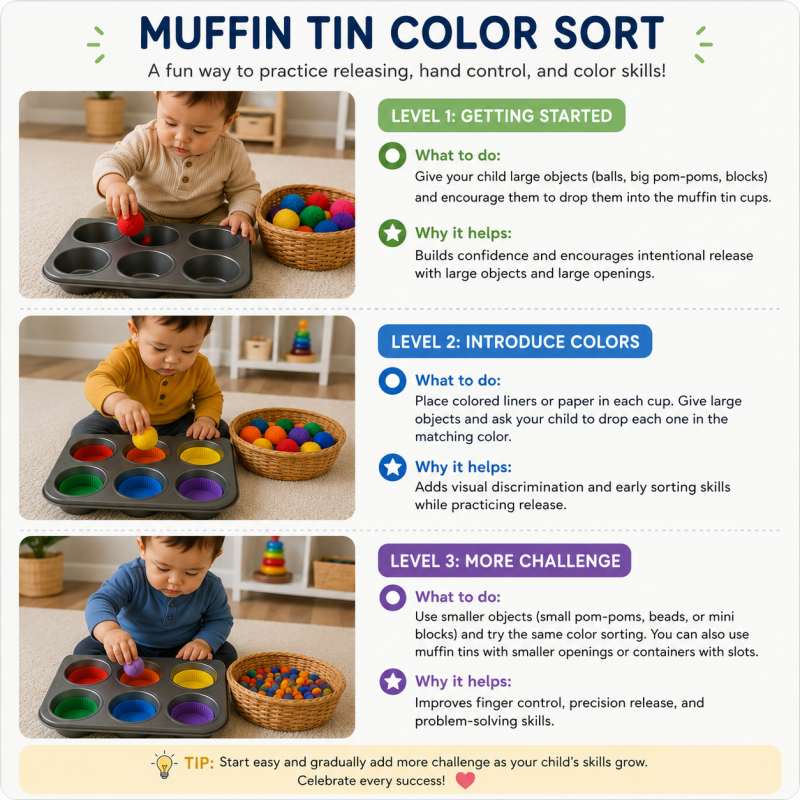
Muffin Tin Drop
Give your child large items like blocks, balls, pom-poms, or large crackers to drop into a muffin tray. Start with bigger objects before moving to smaller ones.

Tissue Box Fun
Cut a larger opening in an empty tissue box and let your child practice dropping toys inside. As skills improve, use smaller openings for more challenge.

Kitchen Helper Play
While cooking, let your child drop large pasta pieces, toy food, or safe objects into a bowl or pot. (Avoid choking hazards.)

Sticky Note Pull & Drop
Place large sticky notes or soft fabric pieces nearby. Let your child pull them off and release them into a basket.
An example of how to grade up/down an activity based on your child's skill level
Create Your Own Website With Webador